


A few months ago, most teams were asking: “Which model is better GPT, Claude, or Mistral?” Now the question has shifted: “How do we make AI actually work across our team?” Access to strong models is solved. You can spin up Mistral, GPT, Claude, Gemini and others in minutes. What’s not solved is how teams use them together in a structured way.
That’s where tools like Mistral Le Chat come in. Le Chat gives you a simple hosted interface over Mistral models, with some organization features on top. It’s great for testing or standardizing on Mistral inside a small team. But if you’re thinking about company‑wide adoption, multimodel strategy, or deep integration into your stack, you’ll quickly run into its limits and start looking for alternatives.
In this guide, we’ll look at the best Mistral AI alternatives what each one actually enables, where they work well, and where they may not fit so you can pick the right tool for your rollout, not just the right model.
TL;DR: Best Mistral AI alternatives
- AICamp – Best alternative if you want structured AI rollout to employees with multimodel access, projects, agents, and governance.
- ChatGPT Team – Best for teams that want a simple shared GPT workspace with minimal setup.
- Claude Team – Best for orgs that prefer Claude and want team features plus large‑context reasoning.
- Langdock – Best for companies that need an EU‑first AI workspace with strong privacy posture.
- Juma – Best for marketing teams that want AI baked into campaign and content workflows.
- LibreChat – Best for teams that want an open‑source, self‑hosted AI workspace with full control.
- Google Gemini (Team / Enterprise) – Best if you live in Google Workspace and want AI across Docs, Sheets, Gmail, and Slides.
- Dust – Best when you need agents tightly wired into your systems and workflows (e.g., Slack, internal tools).
- Microsoft Copilot – Best if your world runs on Microsoft 365 and you want AI inside Office apps and Teams.
- TypingMind Teams – Best for smaller teams that want a lightweight, multi‑model chat UI with some team features.
- Nexos.ai – Best if you want a central LLM workspace + gateway to manage, compare, and govern multiple models.
- OpenWebUI – Best for local or self‑hosted models with a modern web UI.
- LobeChat – Best for developers who want a self‑hosted, extensible multi‑model UI.
- Amazon Q – Best for AWS‑centric organizations that want AI over AWS and internal data sources with strong cloud governance.
What is Mistral AI Chat?
Mistral is an AI company that builds open and efficient large language models and makes them available both as hosted APIs and as downloadable, self‑hostable models. Their lineup includes lightweight models for cost‑efficient inference and larger models aimed at more advanced reasoning and coding use cases.
Unlike “single‑app” AI products, Mistral mostly focuses on the model layer: you plug Mistral models into your own stack, into open‑source frontends (like LobeChat or OpenWebUI), or into enterprise platforms that support multiple providers. This makes it especially attractive for engineering‑led teams that want flexibility, performance, and more control over how and where models run.
Why you should explore Mistral alternatives
You might want to explore Mistral alternatives for a few reasons:
You need more than just a model.
Mistral gives you excellent models, but not a full rollout layer (workspaces, governance, enablement) for non‑technical teams. If your priority is “AI that every employee can use safely,” you’ll likely need a workspace or platform on top.You want multimodel flexibility.
Many teams discover that different models are better for different tasks e.g., GPT for broad capabilities, Claude for long‑context reasoning, Mistral for speed/cost. In that case, you need tools that make it easy to mix Mistral with other providers rather than standardizing on one.You care about adoption, not just access.
Having a good model doesn’t guarantee impact. If prompts live in people’s heads, there’s no shared knowledge base, and no visibility into what works, AI usage will stay fragmented. Alternatives like AICamp, Nexos.ai, or Langdock focus more on shared workspaces, projects, agents, and governance so you can actually scale successful patterns.You prefer suite‑embedded or self‑hosted options.
If your strategy is “AI inside Microsoft 365 or Google Workspace,” tools like Copilot or Gemini may be a better fit. If your strategy is “fully self‑hosted OSS,” you might combine Mistral (or other models) with LibreChat, OpenWebUI, or LobeChat instead of using only the Mistral‑hosted Le Chat interface.
In short, Mistral is a strong choice at the model layer. Exploring alternatives is less about replacing Mistral outright and more about finding the right combination of models + workspace + governance that matches how your team actually wants to use AI.
Access vs adoption (why Mistral alone isn’t enough)
When teams talk about Mistral, the conversation usually starts at the model level: speed, cost, benchmarks, context length. That’s the access question: “Can we call a good model at a good price?” Once you answer that, a different question appears: “How do we actually get our team to use this in a consistent, structured way?” that’s the adoption problem.
Most setups that only focus on Mistral (or any single model) end up in an access‑first pattern: a few power users wire the API into a custom tool or Le Chat, people run ad‑hoc experiments, and usage stays fragmented. There’s no shared knowledge, no central place for prompts and workflows, and no visibility into what’s working well enough to scale. In contrast, adoption‑first platforms (like AICamp, Nexos.ai, or Langdock) treat the model as just one piece; they add workspaces, projects, agents, governance, and reporting so you can actually turn Mistral and other models into repeatable, team‑wide workflows.
Exploring Mistral alternatives is really about moving from “we can hit the API” to “we have a structure for how our team uses AI.” Access is largely solved. Adoption shared knowledge, structured workflows, and governance is where the real leverage is.
Quick view: Mistral Chat AI alternatives
| Tool | Best for | Models / access | Key idea | Indicative pricing (2026, high‑level) |
|---|---|---|---|---|
| AICamp | Structured AI rollout to employees | Multi‑model + BYO | Workspace for rollout: chat, projects, agents, governance | ≈ $20/user (model‑incl.); ≈ $12/user BYO |
| ChatGPT Team | Simple shared GPT workspace | OpenAI only | Shared GPT workspace with light admin | ≈ $30/user/month |
| Claude Team | Teams that prefer Claude | Claude only | Team features + long‑context Claude models | ≈ $25/user/month |
| Langdock | EU‑first AI workspace | Multi‑model + BYO | EU‑centric workspace with workflows and RBAC | High‑20s to low‑30s / user/month |
| Juma | Marketing teams and campaigns | Vendor‑provided LLMs | AI for marketing projects and content workflows | Low–mid per‑user |
| LibreChat | Open‑source, self‑hosted workspace | Any via API/self‑host | OSS multi‑model chat and basic team use | Software free; infra + API costs |
| Google Gemini | Google Workspace‑centric orgs | Gemini only | AI across Docs, Sheets, Gmail, Slides | ≈ mid‑teens to low‑20s / user add‑on |
| Dust | System‑connected agents | Multi‑model + BYO | Agents wired into Slack and your systems | Around $29/user/month + enterprise tiers |
| Microsoft Copilot | Microsoft 365‑centric orgs | Microsoft + partners | AI across Office apps, Teams, SharePoint | ≈ $18–30/user/month add‑on |
| TypingMind Teams | Lightweight multi‑model UI for small teams | Multi‑model + BYO | Clean chat UI, agents, simple team spaces | From ≈ $80–90/month (seats bundle) |
| nexos.ai | Central LLM workspace + gateway | Multi‑model + gateway | Chat, projects, agents, routing, governance | Around mid‑range per‑user + gateway |
| OpenWebUI | Local / self‑hosted setups | Local + remote models | Web UI for local models, plugins, basic multi‑user | Software free; infra only |
| LobeChat | Dev‑driven self‑hosted multi‑model UI | Multi‑model via API | Modern, extensible self‑host UI | Software free; infra + API costs |
| Amazon Q | AWS‑centric orgs, apps, and data | Amazon models + connectors | AI over AWS + internal data with governance | Lite low single‑digits; Business ≈ $20 |
1. AICamp
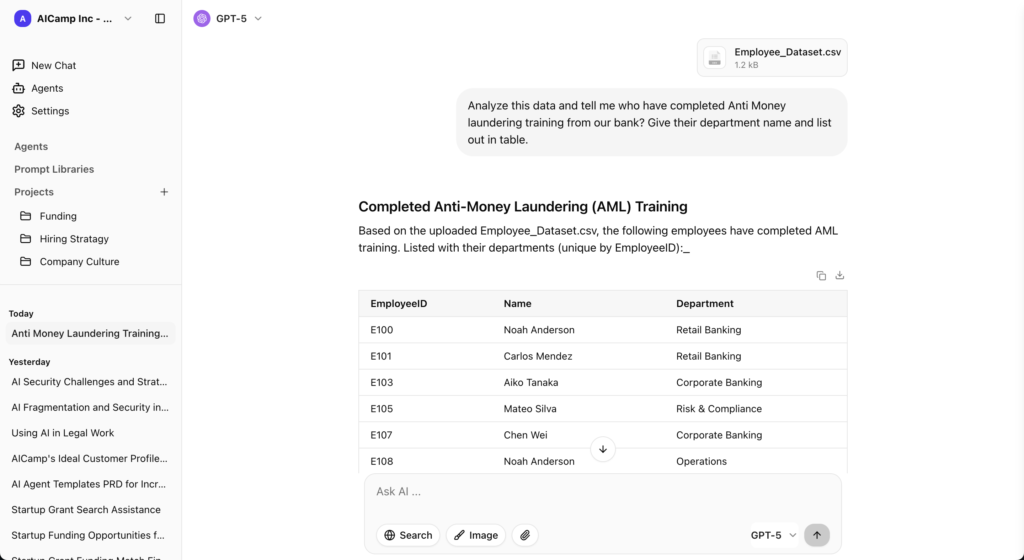
AICamp is an AI workspace and rollout platform built for small and mid‑sized enterprises that want to roll out AI to employees with multimodel access, structure, and governance. Instead of just giving everyone a chatbox, it bundles chat, projects, agents, knowledge, and admin controls in one place so teams can use AI in their real workflows.
What it enables
AICamp enables structured AI rollout across employees: multimodel chat, shared assistants, projects, knowledge, and agents, all under admin controls and governance.
Where it works well
- When you want AI to be a standard part of daily work across multiple teams
- When you care about multimodel + BYO and clear role‑based access, usage insights, and guardrails
Where it may not fit
- Very small, developer‑only setups that mainly need a simple model playground
- Teams that only want a thin UI on top of Mistral or a single provider
Pricing
- Model‑included plan around $20/user/month for most teams.
- BYO‑model plan around $12/user/month if you bring your own LLM APIs.
ChatGPT Team
ChatGPT Team is OpenAI’s team plan that turns individual ChatGPT usage into a shared workspace with centralized billing and light admin controls. It’s still primarily a single‑vendor chat interface, but with shared workspaces and some basic collaboration and management features.

What it enables
ChatGPT Team enables a shared GPT workspace for your team with centralized billing and simple admin. It’s the fastest way to standardize on “everyone just uses ChatGPT here” without building or hosting anything.
Where it works well
- Small‑to‑mid teams that are already heavy ChatGPT users
- When you want to avoid managing infra, gateways, or complex setups
Where it may not fit
- If you specifically want self‑hosting or open‑source
- If you need multimodel access or fine‑grained control over where models run
Pricing
Team plan typically around $30/user/month, billed per seat.
Claude Team
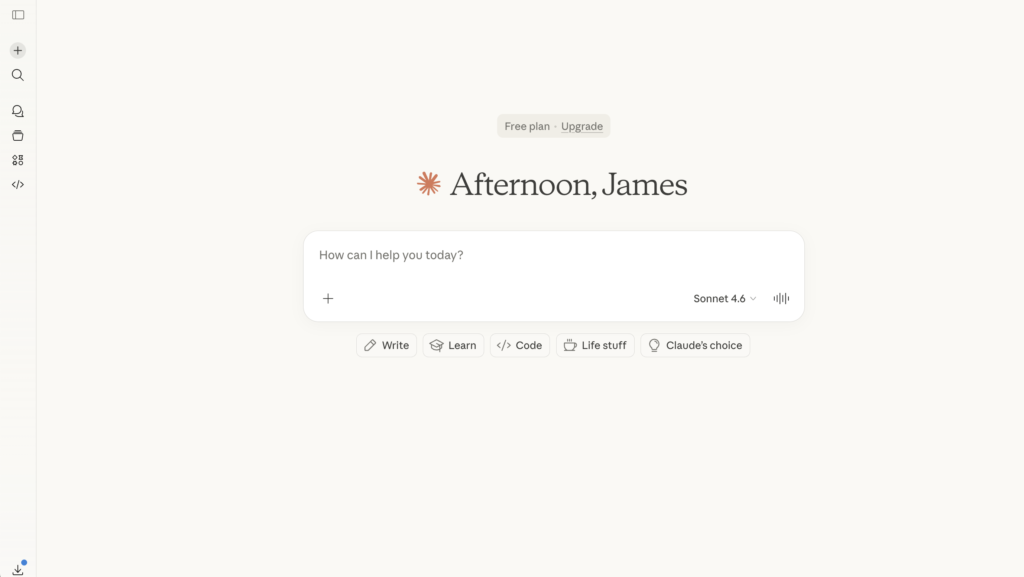
Claude Team gives organizations a shared workspace for Anthropic’s Claude models, including long‑context versions ideal for large documents and complex reasoning. It focuses on high‑quality responses, safety, and collaboration around Claude’s strengths.
What it enables
Claude Team enables a shared space around Claude models, with long‑context capabilities that are great for big documents, research, strategy, and code review. It focuses on quality responses and collaboration on top of Claude.
Where it works well
- Teams that already love Claude and want to standardize on it
- Use cases involving large documents or complex reasoning
Where it may not fit
- If you need a multi‑provider, self‑hosted UI like LobeChat
- If your strategy requires strict on‑prem or full open‑source components
Pricing
Team pricing generally in the mid‑20s USD per user per month range.
Langdock
Langdock is an EU‑first AI workspace aimed at teams that care deeply about data locality and privacy. It offers chat, workflows, projects, and role‑based sharing, with hosting and compliance aligned to European requirements.
What it enables
Langdock enables an EU‑centric AI workspace with chat, workflows, and projects, often hosted and governed with European data requirements in mind. It’s more of a structured workspace than a pure UI layer.
Where it works well
- Companies with EU data residency and privacy requirements
- Teams that want a governed workspace instead of just a dev‑driven frontend
Where it may not fit
- If you specifically need to host everything yourself end‑to‑end
- If your developers want maximum freedom over UI and infra
Pricing
Model‑included plans typically around the high‑20s USD per user per month mark, with BYO tiers slightly lower.
Juma
Juma (often known as Team‑GPT) is an AI tool designed around marketing workflows: campaign planning, content creation, and team collaboration. It feels more like a project management layer for marketing with AI built in than a general‑purpose rollout platform.
What it enables
Juma enables marketing‑specific workflows: campaign planning, content production, and collaboration around prompts and briefs. It feels like project management for marketing with AI built in.
Where it works well
- In‑house marketing teams or agencies aiming to standardize campaign and content workflows
- When you want AI to live where marketing work already happens
Where it may not fit
- For engineering, ops, or cross‑functional rollout across the entire company
- If you need self‑hosting or deep technical control
Pricing
Free or low‑cost entry tiers; business/growth plans typically in the low‑20s to mid‑30s USD per user or per month range depending on seats and volume.
LibreChat
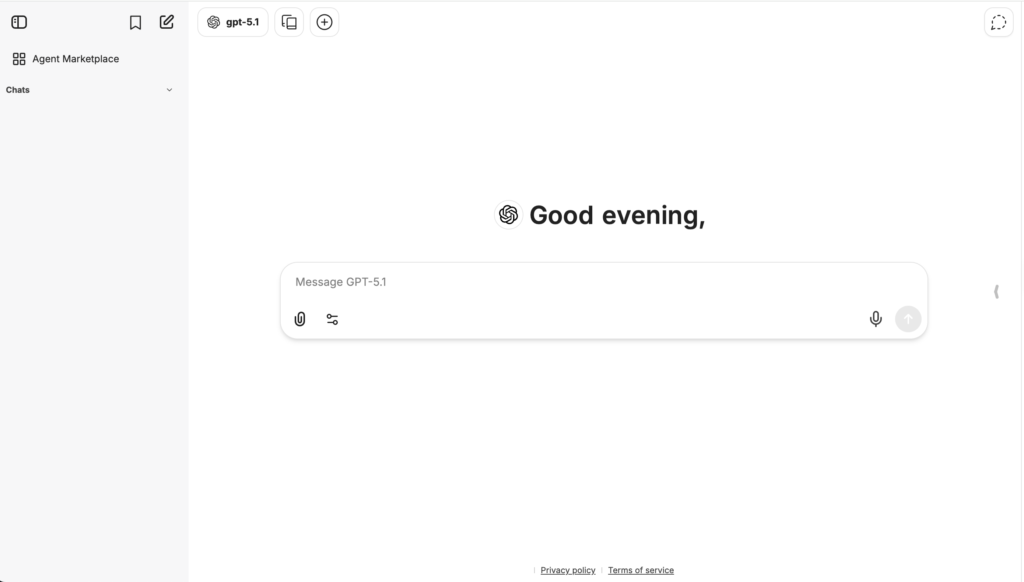
LibreChat is an open‑source, self‑hosted chat and agent interface that supports multiple models through APIs and custom backends. It gives technical teams complete control over where it runs, which models it uses, and how data flows.
What it enables
LibreChat enables an open‑source, self‑hosted AI workspace similar in spirit to LobeChat: multi‑model chat, custom backends, and team usage, all under your own control.
Where it works well
- Engineering‑led teams that want to fully own deployment and data paths
- Orgs that are comfortable running and securing their own infrastructure
Where it may not fit
- Non‑technical teams that don’t want to manage servers, updates, or scaling
- Leadership looking for out‑of‑the‑box governance, reporting, and enablement
Pricing
Software is free; you only pay for infrastructure and model API usage.
Google Gemini (Team / Enterprise)
Gemini Team and Enterprise plans embed Google’s Gemini models across Docs, Sheets, Slides, Gmail, and Meet. Instead of a separate AI workspace, you get AI where people already work inside the Google ecosystem.
What it enables
Gemini for Workspace enables AI inside Docs, Sheets, Slides, Gmail, and Meet instead of through a separate UI. Your team uses AI where they already write, calculate, and communicate.
Where it works well
- Organizations standardised on Google Workspace
- Use cases like content drafting, spreadsheet analysis, and email summarization
Where it may not fit
- If you want a self‑hosted frontend or open‑source stack
- If you need full multimodel support beyond Gemini
Pricing
Typically a per‑user add‑on in the mid‑teens to low‑20s USD per month, on top of Workspace licenses.
Dust
Dust is a platform for building and running AI agents that are tightly connected to your systems and workflows (Slack, internal tools, SaaS apps). It focuses on agents that can read and act on your data, not just answer questions.
What it enables
Dust enables agents that live in your existing tools like Slack, internal apps, and SaaS systems and can read and act on your data. It goes beyond chat, into controlled automations and workflows.
Where it works well
- When you want agents to handle tickets, answer internal questions, or orchestrate tasks inside tools your teams already use
- When ops and IT care deeply about governance and integration depth
Where it may not fit
- If you only need a simple multi‑model chat UI
- If you want fully self‑hosted, open‑source deployment without SaaS
Pricing
Typically around $29/user/month for standard tiers, with custom enterprise pricing for larger deployments.
Microsoft Copilot
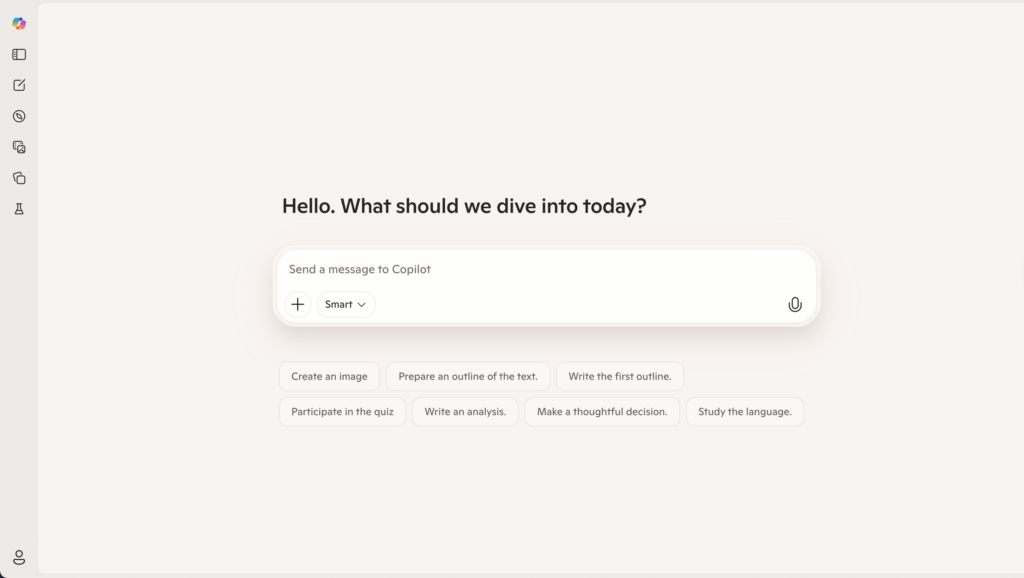
Microsoft Copilot embeds AI across Microsoft 365: Word, Excel, PowerPoint, Outlook, Teams, and more. It is less a separate workspace and more an AI assistant woven through the apps your organization already uses.
What it enables
Copilot enables AI embedded across Word, Excel, PowerPoint, Outlook, and Teams. It’s designed to help people do their current work faster inside Microsoft 365 rather than pulling them into a separate AI app.
Where it works well
- Companies that live inside Microsoft 365 every day
- Knowledge work: documents, emails, decks, spreadsheets, and meetings
Where it may not fit
- If you want a central, model‑agnostic AI workspace or self‑hosting
- If much of your stack is outside Microsoft’s ecosystem
Pricing
Generally a per‑user add‑on in the $18–30/month range, depending on plan and region.
TypingMind
TypingMind is a polished frontend for LLMs with a team offering that adds shared spaces, prompts, and basic admin. It’s more of a UX‑first chat and prompt hub than a full enterprise rollout platform.
What it enables
TypingMind custom enables a hosted, polished multi‑model chat UI with folders, prompts, and some team features without needing to run your own infra.
Where it works well
- Smaller teams that want more structure than one‑off chats, but don’t need full enterprise governance
- Power users who already have API keys and want a better UX
Where it may not fit
- If you require full self‑hosting like LobeChat or LibreChat
- If you need deep RBAC, SSO, and large‑scale rollout features
Pricing
Team plans typically start around $80–90/month including several seats, with extra seats priced per user.
Nexos.ai
Nexos.ai is an AI workspace and LLM gateway designed to centralize how a company uses multiple large language models. It gives teams a single place to chat with different models, organize work into projects, and create task‑specific agents, instead of everyone juggling separate tools.
What it enables
nexos.ai enables a central LLM workspace and gateway: chat, projects, and agents on one side; model routing, logging, and policies on the other. It’s as much a control plane as a UI.
Where it works well
- Organizations that want a single control point for many LLMs and teams
- When security and leadership need visibility and governance around AI usage
Where it may not fit
- Very small teams that just want a simple or self‑hosted frontend
- Orgs that don’t yet need a full gateway or policy layer
Pricing
- nexos.ai offers a 7‑day free trial, with a Pro plan at €25/user/month and Enterprise plans on custom quotes;
OpenWebUI
OpenWebUI is an open‑source web interface for local and remote LLMs. It’s popular with teams running local models or self‑hosted backends who want a simple, modern web UI.
What it enables
OpenWebUI enables a web UI for local and remote LLMs, typically running alongside open‑source or self‑hosted backends. It’s a strong fit for local inference setups.
Where it works well
- Technical teams running local models or their own inference stack
- When you want something you can run on your own machines with a browser UI
Where it may not fit
- Non‑technical orgs that don’t want to manage infra
- Teams needing structured rollout and governance out of the box
Pricing
Software is free; you pay only for infrastructure and any external APIs.
LobeChat
LobeChat is an open‑source, modern multi‑model chat UI that can be self‑hosted and extended. It’s built with developers in mind and supports multiple providers via API keys.
What it enables
- Developer teams that want to self‑host a modern AI UI.
- Organizations experimenting with multiple APIs and custom tools.
Where it works well
- Modern UX and plug‑in ecosystem.
- Multi‑provider by design; great for experimentation.
Where it may not fit
- Requires engineering effort to deploy, secure, and maintain.
- No built‑in enterprise adoption program; you build structure yourself.
Pricing
Software is free; infra and API usage are your main costs.
Amazon Q
Amazon Q Business is AWS’s AI assistant for business users, integrated deeply with AWS services and many SaaS tools.
What it enables
Amazon Q enables AI over AWS resources and business data, with variants for business users and developers. It’s not a generic chat UI; it’s an assistant over your AWS and integrated data sources.
Where it works well
- Organizations that are already deeply invested in AWS
- Scenarios where you want AI to answer questions about infra, apps, or internal data connected through AWS services
Where it may not fit
- If you want a simple, self‑hosted frontend like LobeChat
- If your main need is a general multi‑model UI rather than AWS‑centric intelligence
Pricing
- Lite: $3/user/month.
- Pro: $20/user/month.
- Additional index hourly fees.
FAQs
What is Mistral Le Chat, and when does it make sense to use it?
Mistral Le Chat is Mistral’s hosted chat interface that lets you use their language models in a simple, browser‑based UI, without worrying about APIs or infrastructure. It’s ideal when you want to quickly evaluate Mistral’s models, run day‑to‑day chats, or give a small team access to a strong European LLM without adding more tools. For early exploration, individual work, or lightweight team usage, Le Chat is often “good enough” and very low friction.
Why should I look for Mistral Le Chat alternatives?
You should look for alternatives when your needs go beyond “talk to a Mistral model in a tab.” Common triggers are:
- You want a multimodel setup, mixing Mistral with GPT, Claude, Gemini, or local models in one place.
- You need a workspace layer: shared projects, assistants/agents, knowledge bases, and team‑level structure, not just individual chats.
- Your security or IT team asks for SSO, RBAC, audit logs, usage dashboards, and data controls that Le Chat doesn’t aim to cover.
- You prefer either suite‑embedded AI (Microsoft Copilot, Google Gemini) or self‑hosted frontends (LibreChat, OpenWebUI, LobeChat) instead of a single‑vendor web app.
In those cases, it’s less about Mistral being “bad” and more about Le Chat not being the right layer for organization‑wide adoption.
How do Mistral Le Chat alternatives actually differ in practice?
Most alternatives differ along three axes: models, rollout, and control.
- Models: Some keep you on one vendor (ChatGPT Team, Claude Team), while others are multi‑model or BYO‑API (AICamp, TypingMind, LibreChat, LobeChat).
- Rollout: Access‑first tools are great for quick chats; adoption‑first tools add projects, shared prompts, agents, and enablement so many teams can use AI consistently.
- Control: Hosted products minimize overhead; self‑hosted and open‑source tools give you full ownership of infra and data paths, but require more engineering effort.
If you like Mistral’s models but outgrow Le Chat, the usual pattern is: keep using Mistral at the model layer, and pair it with a workspace or frontend (like AICamp, Nexos‑style platforms, LibreChat, OpenWebUI, or LobeChat) that matches how you want AI to work across your team.