


You’re sitting in another creative review meeting, looking at work that feels… flat.
The copy hits all the brief requirements. The design follows brand guidelines. But something’s missing. It’s technically correct but creatively hollow.
Your team is producing more content than ever, but the spark that made your best campaigns memorable seems to be fading.
Sound familiar?
You’re not alone. Creative teams everywhere are caught in an impossible bind: deliver more content, faster, while maintaining the originality and brand authenticity that makes work actually effective.
The pressure to scale creative output has many teams wondering if AI might be the answer or if it’s the final nail in creativity’s coffin.
This tension between efficiency and originality isn’t going away. But what if the real question isn’t whether AI kills creativity, but how we’re thinking about creativity in the first place?
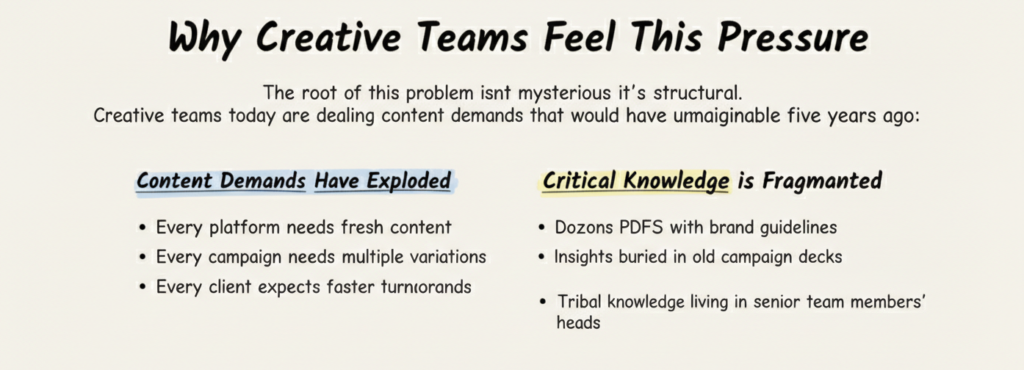
Why Creative Teams Feel This Pressure
The root of this problem isn’t mysterious it’s structural.
Creative teams today are dealing with content demands that would have been unimaginable five years ago:
- Every platform needs fresh content
- Every campaign needs multiple variations
- Every client expects faster turnarounds
Meanwhile, the knowledge that makes work truly on-brand is scattered everywhere:
- Dozens of PDFs with brand guidelines
- Insights buried in old campaign decks
- Tribal knowledge living in senior team members’ heads
The result? Junior creatives spend hours digging through files trying to understand what “premium but approachable” actually means for this specific client.
The creative process has become fragmented. Teams recreate similar briefs from scratch, rediscover insights that were captured months ago, and produce work that varies wildly in quality depending on who’s working on it.
What Teams Usually Try (And Why It Doesn’t Work)
Faced with these pressures, most teams reach for predictable solutions:
More Tools & Process
- More project management systems to track everything
- More templates to ensure consistency
- More review rounds to catch quality issues
Generic AI Experiments
But these approaches create new problems:
More tools = more places to check for information
Templates = formulaic work that feels generic
Extra reviews = slower turnarounds
Generic AI = fast output that doesn’t understand your brand
The real issue? These solutions treat symptoms, not causes. They try to organize chaos rather than prevent it.
Reframing the Creativity Question
Here’s where most teams get it wrong: they think AI threatens originality because it might make work feel generic.
But that misses the real threat to creativity which isn’t AI, it’s inconsistency and disconnection from what makes your brand unique.
What True Creative Originality Actually Is
True creative originality doesn’t come from starting with a blank page every time. It comes from:
- Deeply understanding your brand, audience, and strategic context
- Then finding fresh ways to express those truths
The most original campaigns aren’t random they’re deeply rooted in brand knowledge and strategic insight.
The Real Creativity Killer
When creative teams are constantly:
- Reinventing the wheel
- Scrambling to understand brand guidelines
- Producing work that feels off-brand
They’re not being original. They’re just being inefficient.
Real creativity happens when teams have solid foundations and can focus their energy on the work that actually matters: finding compelling ways to connect with audiences.
What Actually Helps Creative Teams
The teams producing consistently strong creative work have figured out a few key things:
1. Accessible Brand Knowledge
Instead of hunting through old decks, team members can quickly understand:
- Brand voice and personality
- Past campaign insights
- Strategic direction and positioning
2. Structured Creative Process (Not Output)
They have consistent ways of:
- Briefing projects
- Running creative workflows
- Giving and receiving feedback
This structure frees up mental energy for the creative work that matters.
3. Building on Past Success
They can quickly:
- Reference what worked in previous campaigns
- Adapt successful approaches for new contexts
- Avoid repeating past mistakes
This isn’t about copying it’s about learning and iterating.
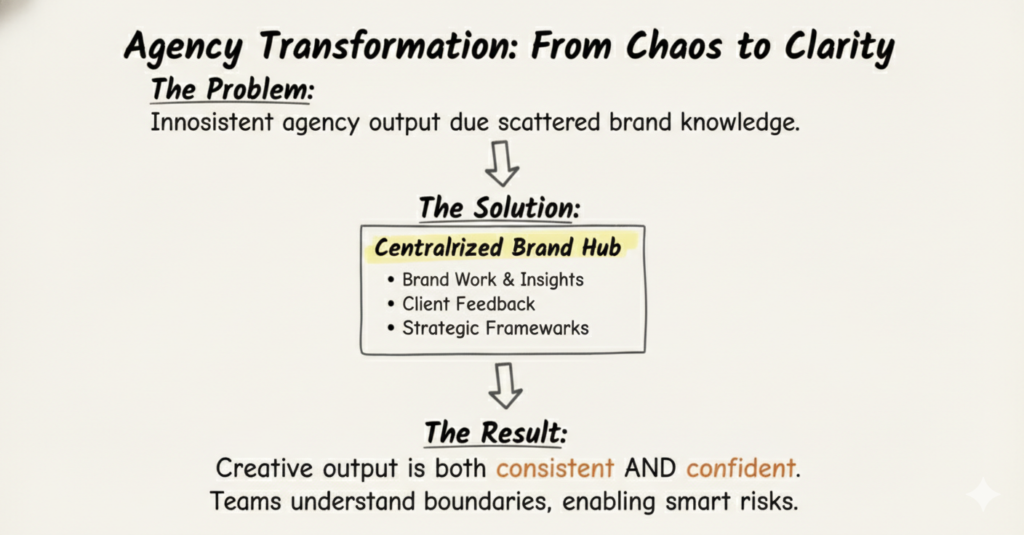
Real Team Example: From Inconsistent to Confident
The Problem: A branding agency was struggling with inconsistent work across their team. Junior designers were producing concepts that looked nothing like the senior creative director’s vision not because they lacked talent, but because they didn’t have access to the same context and brand understanding.
The Solution: They centralized all their brand knowledge:
- Guidelines and standards
- Past campaigns and results
- Client feedback and insights
- Strategic frameworks
The Result: Their creative output became more consistent, but also more confident. Instead of playing it safe because they weren’t sure what was on-brand, team members could take creative risks because they understood the boundaries.
Common Mistakes That Kill Results
1. Expecting AI to Fix Thinking Problems
If your creative strategy is unclear or your brand positioning is muddled, AI will just produce muddled work faster. The technology amplifies whatever foundation you give it.
2. Over-Relying on Automation
AI can help with first drafts and ideation, but human judgment is still essential for:
- Strategic decisions
- Creative direction
- Understanding what will resonate with audiences
3. Ignoring Creative Culture
If team members feel like AI is replacing their creative input, they’ll disengage. The goal should be augmenting human creativity, not replacing it.
What This Means Going Forward
Creative teams that thrive in the next few years will be those that figure out how to maintain their creative edge while meeting increased demands for content and speed.
This isn’t about choosing between human creativity and AI efficiency it’s about finding ways to combine them effectively.
The Competitive Advantage
Teams that get this right will be able to:
- Produce more high-quality work
- Maintain consistent brand voice across large teams
- Free up their best creative minds for work that actually moves the needle
This shift is already happening. The question isn’t whether AI will be part of creative work it’s whether your team will use it thoughtfully or let it use you.
Where AI Actually Fits (And Where It Doesn’t)
What Doesn’t Work
Generic AI tools that pull from the entire internet:
- Can’t distinguish your brand voice from everyone else’s
- Produce generic output that could be for any brand
- Actually dangerous for brand consistency
What Does Work
AI that’s grounded in your specific:
- Brand guidelines and messaging frameworks
- Campaign history and performance data
- Strategic context and audience insights
The key insight: AI isn’t replacing creative thinking it’s handling the foundational work so humans can focus on creative decisions that actually matter.
Instead of spending time figuring out brand voice basics, creatives can focus on finding compelling ways to express that voice.
Take One Small Step
Look at your team’s last five creative projects. Ask yourself:
- How much time was spent figuring out brand basics versus actually creating?
- How consistent was the quality and voice across different team members?
- What insights from past work could have helped but weren’t accessible?
If you’re exploring ways to bring more clarity and shared context into your creative workflows, that’s a worthwhile next step. Whether you use AI or not, the foundation matters more than the tool.